


England closed their World Cup campaign with a remarkable 6-4 victory over France in the third-place play-off. The result supplied one final burst of attacking drama after the semi-final defeat by Argentina, but the tournament also exposed uneven form, fitness problems and a handful of selection gambles.
Goalkeepers
Jordan Pickford – 6. England’s established number one looked most assured in the semi-final against Argentina, although Enzo Fernandez’s goal left him with questions to answer. It was an unusually erratic tournament by his standards.
Dean Henderson – 6. The second-choice goalkeeper started against France and made an excellent save from Kylian Mbappe. Three of France’s goals went past him during his time on the pitch.
James Trafford – not rated. Trafford travelled as the third-choice goalkeeper and did not play. The tournament still gave him valuable experience inside a senior England squad.
Defenders
Ezri Konsa – 7. Konsa featured in every game and reinforced his international credentials. He covered right-back in the quarter-final win over Norway and scored in the third-place play-off.
John Stones – 7. Taking Stones was a fitness gamble. He struggled in the opener and briefly lost his place, then recovered to start against Norway and Argentina. His quality remained evident, although Lautaro Martinez caught him under the ball for the semi-final winner.
Marc Guehi – 8. Guehi brought calmness to the back line after missing the starting side in the opening match. His work against Erling Haaland in the Norway quarter-final was among England’s strongest individual defensive displays.
Trevoh Chalobah – 5. Called up to replace Tino Livramento, Chalobah’s selection prompted debate because England appeared short of specialist full-backs. His only minutes came late in the victory over France.
Jarell Quansah – 6. Quansah showed why Thomas Tuchel valued his flexibility during his first major tournament. Injury interrupted a promising start against Panama, and a red card followed against Mexico. He returned for the play-off and remains a player with a bright international future.
Dan Burn – 6.5. Burn justified his inclusion with a strong performance against Mexico. His aerial strength offered England a useful way to close games, although that approach was introduced too early when the team tried to protect its lead against Argentina.
Nico O’Reilly – 6.5. This was O’Reilly’s first major tournament at the age of 21. He had only become England’s preferred left-back in November, yet started five of the team’s eight matches. His composure in possession impressed, with defensive improvement still required.
Reece James – 6.5. A hamstring injury against Ghana cost the first-choice right-back three games. James recovered in time for the quarter-final and semi-final, where his technical quality remained clear.
Djed Spence – 8. Spence emerged as one of England’s breakout performers. His pace, one-on-one defending and ability to operate on either flank gave the team genuine flexibility. He finished with another positive display against France and won a penalty.
Midfielders
Declan Rice – 7.5. Rice played through a hamstring problem and illness. He was not always at his best in possession, but his physical authority mattered throughout the knockout rounds. As captain against France, he contributed both a goal and an assist.
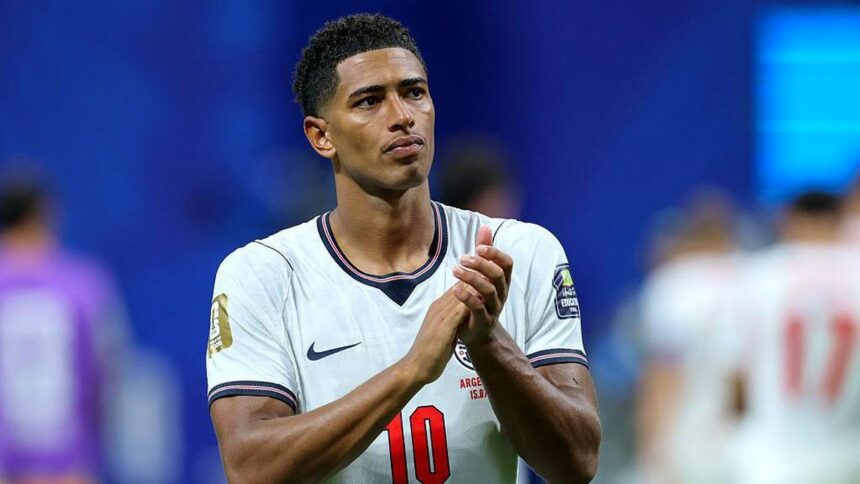
Jude Bellingham – 9. Bellingham was England’s outstanding player and grew into the role of the team’s talisman. His technique, mentality and capacity to influence high-pressure matches underlined his importance to the side’s future.
Jordan Henderson – 4. Henderson became the first Englishman to appear at four World Cups, only for his tournament to end in unusual circumstances. He broke his arm after falling over an advertising hoarding following the Mexico win. Surgery ruled him out, although he remained with the squad.
Elliot Anderson – 7. Anderson handled the responsibility of operating as England’s starting number six and began every match apart from the play-off. His best work in possession came against Argentina. The next step is to exert greater control when major matches become stretched.
Kobbie Mainoo – not rated. Mainoo was the only outfield member of the squad who did not play. An injury kept him out of the third-place play-off.
Forwards
Bukayo Saka – 7.5. Saka arrived with an Achilles problem and produced his best football in flashes. He signed off emphatically with a hat-trick against France.
Morgan Rogers – 7.5. Rogers was used across the positions behind the striker and made important contributions in the last eight and semi-final. His assist for Anthony Gordon against Argentina briefly put England within sight of the final.
Anthony Gordon – 8. After a slow start, Gordon became one of England’s most productive attackers. He supplied two assists against DR Congo, won the decisive penalty against Mexico and created the equaliser against Norway. His goal against Argentina completed an influential tournament.
Eberechi Eze – 6.5. Eze had a quiet competition overall but remained a useful option from the bench. A start against France brought his best display, including the pass for Saka’s fourth goal.
Ollie Watkins – 5. Watkins received only six minutes against Panama before appearing at half-time against France. His ability to run behind a defence might have offered England a different route against Argentina.
Noni Madueke – 6. Madueke’s direct running and dribbling gave Tuchel a distinct attacking option. He won the penalty that produced England’s first goal of the tournament against Croatia.
Ivan Toney – 6. Toney was selected partly for his penalty-taking quality. He entered late as England chased an equaliser against Argentina and then started the third-place play-off.
Marcus Rashford – 6.5. Rashford scored from the bench in the opening game, but his involvement fluctuated after that. He played only a minute against Argentina before ending on a brighter note with an assist for Saka against France.
Harry Kane – 8.5. The captain again delivered goals on the biggest stage and had six before the quarter-final. He also created Bellingham’s goal against Mexico. The extra-time contests with Mexico and Norway appeared to drain him before the defeat by Argentina.
What England Take Forward
Bellingham led the ratings, with Guehi, Spence, Gordon and Kane also emerging with strong tournament records. England demonstrated its attacking depth in a ten-goal bronze-medal match, yet the route to the next major tournament will demand better fitness management, more midfield control and greater consistency from the established leaders.