


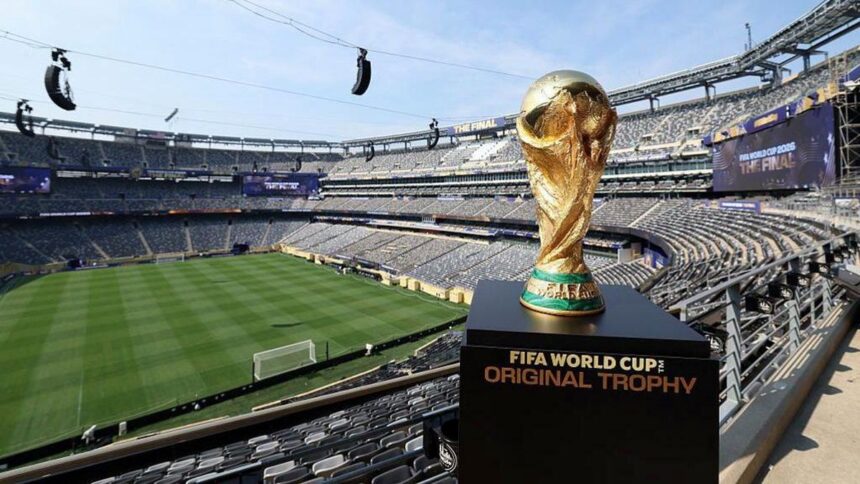
Argentina and Spain set for historic final as 48-team format delivers drama
Argentina and Spain will meet in the World Cup final at the New York/New Jersey Stadium on Sunday, the culmination of a expanded 48-team tournament that produced both fresh storylines and persistent controversy. Fifa president Gianni Infantino had promised the 2026 event across the United States, Mexico and Canada would be the “biggest event in the history of mankind,” likening it to 104 Super Bowls in one month.
Cape Verde and the debutants justify expansion
The enlarged field gave debuts to Curacao, Cape Verde, Jordan and Uzbekistan, and Cape Verde’s run vindicated Infantino’s decision to grow the tournament. The Atlantic archipelago of just 530,000 people claimed draws against Spain, Uruguay and Saudi Arabia to finish second and reach the knockout rounds.
Cape Verde then took Argentina to extra time before losing 3-2, meaning the African nation avoided defeat in 90 minutes against both finalists. Curacao recovered from a 7-1 loss to Germany to draw with Ecuador, while DR Congo drew Portugal and advanced from their group.
Without these stories, the group stage would have been dull, as major nations made light work of opponents across 72 matches that eliminated only 16 teams. Fifa’s use of head-to-head over goal difference as the first tie-breaker, plus eight third-placed teams progressing, let Australia and Paraguay and Austria and Algeria draw knowing both would qualify, which they did.
Seeded draw keeps powers apart
Fifa granted Argentina, England, France and Spain special status to be drawn into separate quarters, avoiding early meetings among the top four. The rule had no real influence on those four reaching the last four for the first time, since the draw kept them apart until the semis regardless.
To ensure the top-ranked Argentina and second-ranked Spain could not meet before the final, Fifa swapped Argentina into Group J and France into Group I. Without the swap, England would have faced France in the semis and Argentina would have met Spain, making an Argentina-Spain final impossible.
Hydration breaks become tactical timeouts
Fifa introduced mandatory three-minute hydration breaks in every match for player welfare, applied even in air-conditioned Atlanta, Dallas, Houston and Vancouver stadiums. Broadcasters outside the UK ran ads beginning 20 seconds after the whistle and ending 30 seconds before play, with experts citing US ad slots from $200,000 to $750,000 depending on stage.
The breaks became tactical timeouts as coaches used devices to deliver changes, altering several matches, and supporter boos grew as the tournament progressed. Uefa has ruled them out for its competitions, but they may return at the next World Cup.
Collina’s tempo reforms show results
Pierluigi Collina, Fifa’s head of referees, pushed law changes to speed up throw-ins, goal-kicks and substitutions and curb feigned injuries. Average match length fell to 96 minutes 24 seconds with 58 minutes 15 seconds of ball-in-play, compared with 101 minutes 22 seconds and 58 minutes three seconds in 2022, raising active play from 57.4% to 60.4% of match time.
Attendance defies price fears
Despite sky-high ticket prices, Fifa reported 99.7% capacity after the quarter-finals with a record 6,527,410 fans, and its resale platform added 30% fees per sale. Controversy remained as New York and New Jersey attorneys general subpoenaed Fifa over pricing and seat accuracy, a water-bottle ban was reversed, and transport costs to New Jersey and Boston were cut after backlash.
Politics and a suspended ban
The tournament was politicised before kickoff through US visa issues, with Somali referee Omar Artan refused entry at Miami Airport and Infantino telling critics to “chill, relax.” Iran entered only for 24 hours around each fixture, and US homeland security head Markwayne Mullin said he “danced a happy dance” at their elimination.
Donald Trump called Infantino to intervene after Folarin Balogun’s red card against Bosnia-Herzegovina. Disciplinary committee member Mohammad al-Kamali suspended Balogun’s ban for 12 months, an unprecedented move, and Balogun played as Belgium routed the co-hosts 4-1, raising questions about political interference.
VAR speed masks inconsistency
VAR ran smoothly in the group stage but drew complaints in the knockouts, including Egypt’s request for investigation after a 3-2 loss to Argentina with a disallowed goal. The tournament has seen 37 interventions at 0.36 per game, near Qatar’s 0.37 and above the Premier League’s 0.29, with subjective reviews at 0.27 per match versus 0.15 domestically.
The clearer difference was speed: decisions came swiftly bar a few cases, easing the frustrations that plague domestic video review.