


How Hamilton and Antonelli penalties reshaped the Hungarian Grand Prix grid
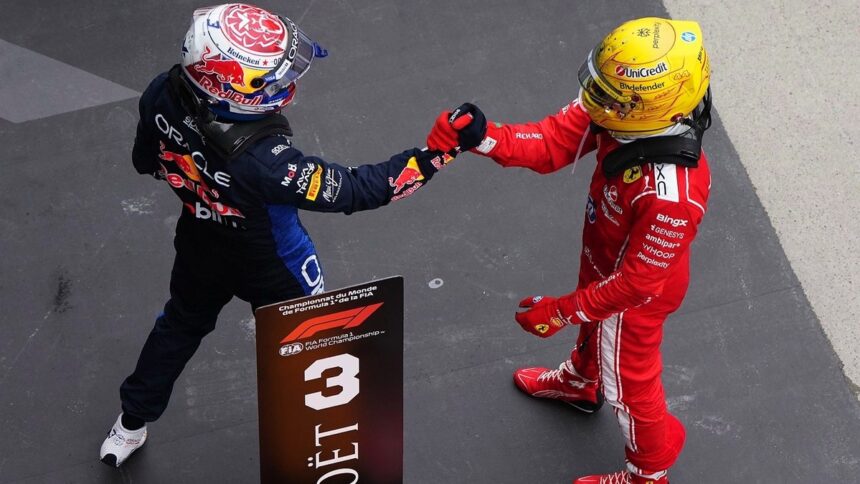
Lewis Hamilton and Kimi Antonelli each received three-place grid penalties after qualifying for the 2026 Hungarian Grand Prix, dropping the Ferrari driver from second to fifth and the Mercedes rookie from fourth to seventh. The FIA published the provisional starting grid around 8:00 pm, but the order sparked debate among fans who expected Hamilton to line up behind Oscar Piastri and ahead of Max Verstappen once Antonelli’s penalty was applied.
The confusion stems from a misunderstanding of Article B2.5.4 of the Formula 1 Regulations, which governs how the starting grid is constructed when penalties are involved. Under the current procedure, drivers with 15 or fewer cumulative unserved grid penalties are placed on a nominally empty grid first, with their qualifying position plus penalty total determining a temporary slot. If multiple penalized drivers share a temporary position, qualifying order breaks the tie, with the slowest driver keeping the spot and others moving ahead.
In Hungary, Hamilton and Antonelli were placed simultaneously on this empty grid. Hamilton’s second place plus three penalties locked him into fifth, while Antonelli’s fourth place plus three penalties placed him seventh. Only after penalized drivers are positioned do unpenalized drivers fill the remaining vacancies in qualifying order, which moved Piastri to third, Verstappen to fourth, and George Russell to sixth.
This system replaced an older method where penalties were applied sequentially to a finalized grid, which could render some penalties ineffective when multiple drivers were sanctioned. By locking in penalized positions first, the FIA ensures drivers actually serve their penalties regardless of other changes. Hamilton was always going to start fifth once penalized; Antonelli’s simultaneous penalty did not alter that outcome, though it did allow Verstappen to gain two places.