


Uefa restricts VAR use of mistaken identity after World Cup controversy
Uefa has instructed its video assistant referees not to treat potential simulation as mistaken identity, closing a loophole that shaped two high-profile decisions at the 2026 World Cup. The directive arrived as officials gathered for this week’s opening European qualifying rounds, and it directly follows the International Football Association Board’s summer tweak to the VAR protocol.
World Cup decisions triggered the backlash
Ifab changed the rules so a VAR could intervene to alter a yellow or red card when a referee wrongly identified which player committed an offence. The protocol was activated twice in the tournament, first to overturn a yellow card given to United States defender Tim Ream for a foul and switch it to Paraguay’s Miguel Almiron for a dive.
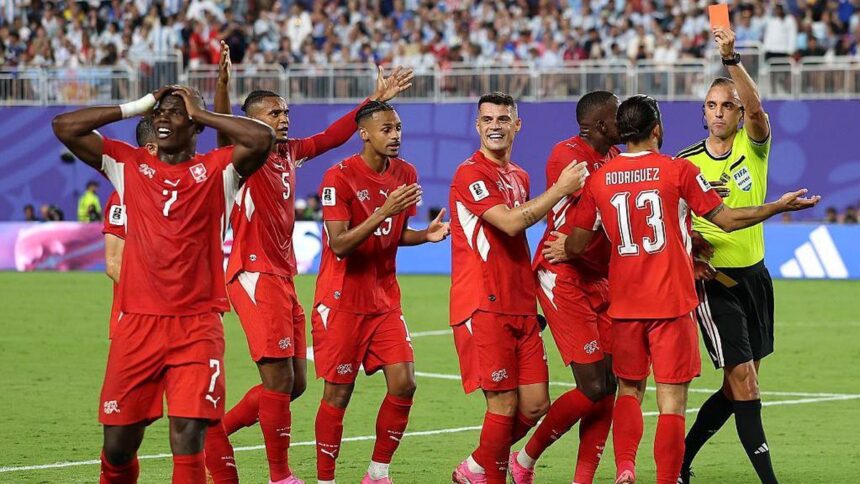
More controversially, Switzerland striker Breel Embolo was sent off in the 72nd minute of the quarter-final against Argentina. Leandro Paredes was booked for a reckless challenge, but the review showed Embolo had initiated the contact, and because the 29-year-old was already on a caution he received a second yellow and was dismissed.
The decision came five minutes after Switzerland had levelled at 1-1. Argentina went on to win 3-1 after extra time.
Many supporters welcomed both calls as a signal that diving would be punished. Yet several domestic leagues said the use of mistaken identity for simulation had never been mentioned and arrived as a complete surprise.
Concerns over chaos at club level
One league warned the change could cause “chaos”, with every yellow card reviewable for potential simulation. Others pointed to added pressure on officials and a two-tier system in which simulation could only be reviewed if a card had been shown, leaving unchecked embellishment on unbooked free-kicks that lead to goals.
Leagues also questioned how consistently clear simulation could be judged. In briefings before the World Cup, Fifa head of referees Pierluigi Collina used the Euro 2016 final as the example: referee Mark Clattenburg booked France’s Laurent Koscielny for handball when Portugal’s Eder had used his arm, a case Fifa said the VAR could correct by giving the free-kick to France. Simulation was never referenced in those sessions.
Uefa’s interpretation and remaining powers
Uefa holds that mistaken identity is a purely factual call involving the same offence, such as handball, and does not require the referee to visit the monitor. Changing a foul to simulation reviews different, subjective offences and demands the referee see the screen, so Uefa says simulation is not mistaken identity.
The VAR can still punish diving when it produces an incorrect second yellow, straight red, or penalty. Uefa will check incorrect corners without reviewing potential offside in the build-up, limiting the check to the last touch.
European football’s governing body has also rejected using VAR to issue red cards for covering the mouth in confrontations. The offence sent Almiron and Ecuador’s Piero Hincapie off at the World Cup.
What happens next
Head referees from Uefa’s 54 member nations meet next week to discuss VAR use, with mistaken identity on the agenda. The domestic leagues are expected to follow Uefa’s factual-only approach, and the Ifab declined to discuss the law’s interpretation when contacted.