


Argentina end England’s 2026 World Cup run in Atlanta
Thomas Tuchel’s England surrendered a late lead to a Lionel Messi-inspired Argentina on Wednesday, losing 2-1 in Atlanta and missing the 2026 World Cup final. The defeat extended a wait for a second title that began when Bobby Moore lifted the Jules Rimet trophy at Wembley on 30 July 1966. England have now lost all three semi-finals played since that victory, in 1990, 2018 and 2026.
A familiar pattern of near misses
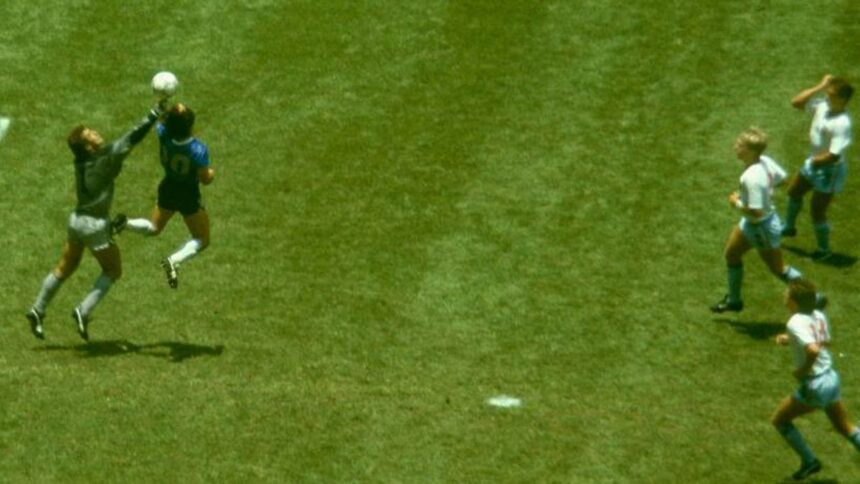
England have appeared at 12 of the 15 World Cups since 1966 and have repeatedly come close without returning to the final. Their exits have become part of football folklore, from surrendering a 2-0 lead against West Germany in 1970 to Diego Maradona’s “Hand of God” and “Goal of the Century” in 1986, Paul Gascoigne’s tears in 1990, Beckham’s red card in 1998, Ronaldinho’s free-kick in 2002, Lampard’s disallowed goal in 2010, Kane’s missed penalty against France in 2022 and Argentina’s comeback this summer.
There have been only two occasions this century when a team scored first in a World Cup semi-final but lost, and both were England, against Croatia in 2018 and Argentina in 2026. Germany, including West Germany, and Argentina have each eliminated England from the World Cup three times since 1966.
The numbers behind six decades of hurt
Since England beat West Germany 4-2 after extra time in the 1966 final, 454 players have made their England debut. The first was John Hollins, England’s 847th men’s international, in a 2-0 friendly win over Spain at Wembley in May 1967; the most recent is Liverpool teenager Rio Ngumoha, the 1,300th player, who debuted in June’s 1-0 friendly victory over New Zealand in Tampa.
At World Cups, 161 different players have represented England since 1970. No fewer than 15 permanent England managers have attempted to emulate Alf Ramsey, with Ron Greenwood, Bobby Robson, Glenn Hoddle, Sven-Goran Eriksson, Fabio Capello, Gareth Southgate and Tuchel leading sides at the tournament. Only seven men have captained England at a World Cup since 1966: Moore, Mick Mills, Bryan Robson, Alan Shearer, David Beckham, Steven Gerrard and Harry Kane.
Since 1966 there have been 30 places available in the World Cup final, filled by only eight nations. Germany and Argentina have each appeared six times, Brazil, Italy and France four, the Netherlands three, Spain twice and Croatia once. England remain outside that group.
England’s goalscorers and Tuchel’s verdict
England have continued to produce players capable of lighting the World Cup despite the long wait. Gary Lineker scored six goals for the Golden Boot in 1986, Kane matched that in 2018 and again struck six times in 2026, sharing the burden with Bellingham, who also scored six.
“The decisions Tuchel made cost England,” read one assessment of the semi-final loss. Tuchel said there were “no regrets” on England’s defeat against Argentina, though Kane is unsure if he will play at the next World Cup.
How the world moved on without England
The passing of time is measured away from the pitch as well. Britain has had 14 prime ministers from Harold Wilson to Sir Keir Starmer, and the US 11 presidents from Lyndon B Johnson to Donald Trump. Queen Elizabeth II was succeeded by King Charles III, there have been seven James Bonds and 15 incarnations of Doctor Who, humans walked on the Moon, the Berlin Wall fell, the Web was invented and the smartphone era arrived.
When England won in 1966, Chris Farlowe’s Out of Time was the UK number one and an estimated 32.3 million watched the final. Three Lions later lamented “30 years of hurt”; Moore remains the only England captain to lift football’s greatest prize. With another cycle beginning, the hope persists that the next generation will finally bring it home.